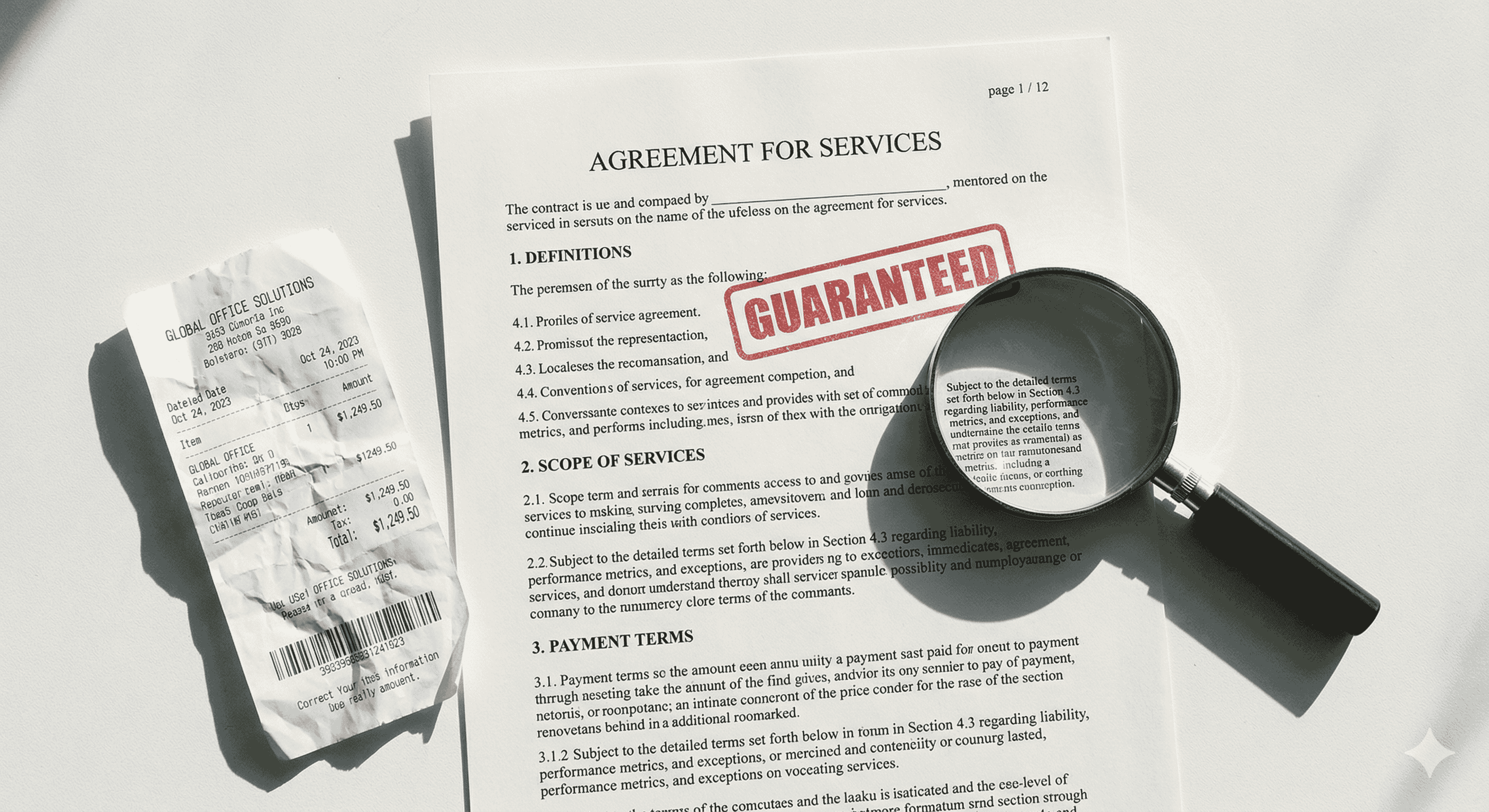
You’ve seen the pitch. It arrives in your inbox, sometimes with a text message first, sometimes cold on LinkedIn. “Guaranteed features in Forbes, Business Insider, NBC, CBS, and 25+ major outlets—within 30 days.” It sounds like the exact shortcut your credibility problem needs.
Then comes the price: anywhere from $2,000 to $15,000. Sometimes more.
Here is what you need to know before you respond: in the vast majority of cases, this pitch is either a scam, a misrepresentation, or the kind of “coverage” that creates more problems than it solves.
Understanding how guaranteed media placement schemes actually operate—and why authentic editorial coverage can never be transactionally guaranteed—is one of the most important things a founder, SMB owner, or marketer can learn before spending a single dollar on PR.
A guaranteed media placement is a promise made by a PR or media visibility service that your brand will appear in named publications—Forbes, Yahoo Finance, NBC, Business Insider—in exchange for a fixed fee.
The premise is that media coverage can be purchased like an ad buy. It cannot. Genuine editorial coverage is earned through newsworthiness and independent journalistic judgment. Any service that tells you otherwise is selling something other than what you think you’re buying.
The mechanics are not complicated once you see them. The sophistication is in the pitch, not the delivery.
The most common version involves spoofed or misleading domains. A buyer is told they’ll be featured in Forbes. What they receive is a placement on Forbes.zone—a completely unrelated website designed to look credible enough to pass a quick glance.
Real buyers have documented this exact experience publicly. One Reddit thread called out an agency charging $3,500 for “Forbes” coverage, only for buyers to discover the placement was on Forbes.zone, a fraudulent site with zero affiliation to Forbes Media.
A second version uses legitimate wire services dishonestly. Press release wire distribution can technically result in your content appearing on Yahoo Finance, Google News, or Gannett-owned local news sites.
The key word is technically. These appearances are auto-syndicated, un-edited, and completely buried. Buyers who have tracked these placements describe it well: “It’s as if you rented a room in the sub-basement of Yahoo’s immense mansion.” No journalist read it.
No editor touched it. No human being sought it out. And agencies are charging $2,000 or more for what a $350 wire distribution could achieve.
The third version is outright fabrication. Logos appear on client websites. Screenshots of “coverage” are delivered that either don’t exist when you search for them, or link to pay-to-play contributor sections with no editorial oversight, no reader traffic, and no authority transfer whatsoever.
“Any agency offering guaranteed media placements is likely pulling your leg. Real PR is earned, not bought.”
The operational pattern is consistent across dozens of documented cases: a compelling upfront promise, payment collected through methods that limit buyer protection (Venmo friends-and-family, Zelle, wire transfers), delivery of something technically defensible as “coverage,” and then escalating pressure or ghosting when buyers push back.
Research compiled from 80+ buyer sources across Reddit, Trustpilot, G2, and industry forums reveals a consistent emotional fingerprint.
Buyers don’t just feel financially disappointed—they feel betrayed, embarrassed, and in many cases professionally humiliated. They recommended the vendor internally. They burned political capital to get the budget approved. Now they have to walk it back.
Here is how real buyers describe these experiences, in their own words:
“They over promise and under deliver—especially in terms of quality and depth of knowledge of my market. Content seems rushed, low effort and no depth.”
“It’s a scam. These releases don’t actually show up on the syndicated sites when you search for them. It’s just a way to inflate numbers for execs.”
“The biggest issue was overpromising and under-delivering. They never proactively communicated when they wouldn’t be able to deliver something as promised.”
What connects these accounts is not just frustration with a vendor—it is the structural realization that the promise was never achievable.
No agency, regardless of its relationships, can guarantee that an independent journalist at a credible publication will write about your company. That decision belongs to the editor. It always has.
This is the foundational truth the industry’s worst actors rely on buyers not fully understanding: editorial coverage is a journalistic decision, not a commercial transaction.
When a journalist at a credible publication covers a story, that decision is governed by newsworthiness, editorial standards, source relationships, timing, and audience relevance. None of those factors can be purchased.
A PR professional can pitch effectively, time an announcement well, craft a compelling narrative, and create conditions that make coverage more likely—but they cannot guarantee the outcome. That is not a limitation of skill. It is a structural property of how independent journalism works.
The editorial independence that makes coverage in a credible outlet valuable is the exact same independence that makes it unguaranteed.
The moment a placement is guaranteed, it is no longer independent editorial coverage—it is paid placement, advertorial, or fabrication.
Coverage that can be bought is coverage that audiences increasingly recognize as bought. The credibility transfer—the thing you are actually paying for—depends entirely on the coverage being real, earned, and independent.
The editorial independence that makes coverage valuable is the same independence that makes it impossible to guarantee. These two facts are inseparable.
Some legitimate services do offer placement guarantees in pay-to-play contributor sections, sponsored content designations, or brand studio posts.
These have valid applications, and there is nothing inherently wrong with them. But they must be accurately represented. When a vendor describes a Forbes Brand Voice post as “being featured in Forbes,” that is misrepresentation, not service delivery.
A legitimate media visibility service operates with transparency as its primary discipline. The deliverables are named before you pay. The outlets are identified. The process is explained. The honest limitations are disclosed upfront. And when the work is done, the placements are verifiable by anyone who looks.
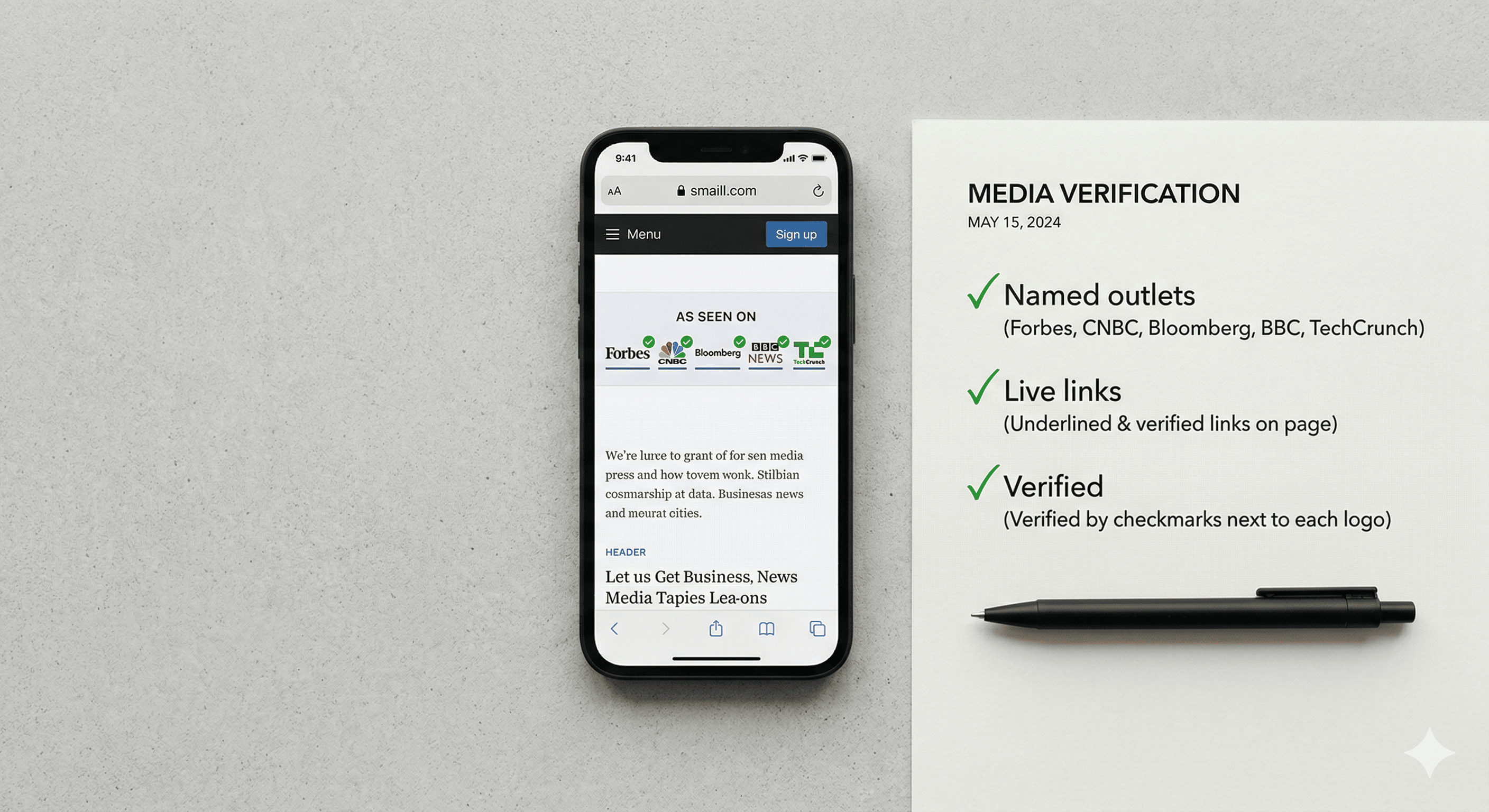
Here is what that looks like in practice:
• Transparent deliverables: You know exactly what you are purchasing before any money changes hands. A press release written to professional standards.
Distribution to a defined network of named outlets. Live links provided upon completion. No vague descriptions of “media outreach” or “coverage campaigns.” No strategy hours billed before a single word is written.
• Named outlets: The distribution network is disclosed. You can research those outlets, assess their authority, and determine whether the placement aligns with your credibility goals. If a service won’t name its outlets upfront, that is a meaningful signal worth heeding.
• Verifiable live links: Every placement is confirmed with a working, live URL—not a screenshot, not a PDF, not a logo on a slide deck. A link that anyone can open, read, and verify. Coverage that cannot be independently confirmed is not coverage.
• Honest framing of what distribution means: Wire syndication that results in content appearing across a network is a legitimate service—when sold as exactly that. It is not the same as earned editorial coverage, and trustworthy providers explain the distinction clearly without being asked.
Legitimate services also convert those placements into lasting credibility assets. The coverage does not disappear into a forgotten campaign report. It becomes something deployable on your website, verifiable by prospects, and useful long after publication.
One of the ways Brand Featured distinguishes itself is through a mechanism that turns press distribution into a permanent, verifiable trust signal: a proprietary dynamic HTML “As Seen On” badge built specifically to function as proof, not decoration.
This is not a static logo strip. Every media logo in the badge links directly to the client’s actual press coverage on that outlet. Anyone who clicks can independently verify the placement is real. Logos resize and reorder automatically across screen sizes. And because the coverage is live and linked, it functions as an ongoing credibility asset—not a one-time announcement that fades from memory.
The practical effect is significant. A bootstrapped founder documented exactly this: after adding “As Seen On” badges with real, clickable, verified links, the site stopped looking like “another questionable landing page” and started converting differently.
Investor inquiries followed within a week—not because the coverage drove traffic, but because the credibility signals changed how visitors evaluated the business.
Receipts, not logos. Every badge links to the actual coverage. Every placement is verifiable. That is the only standard worth holding.
Brand Featured does not guarantee specific editorial outcomes. We are direct about that from the first conversation.
We recognize this feels counterintuitive in a market where competitors make sweeping guarantees to close sales.
But consider what a guarantee actually signals: either the vendor has purchased the placement (which means it is not editorial coverage), or the vendor is making a promise they know they cannot keep in order to take your money. Neither outcome serves you.
Our no-guarantee stance is not a hedge or a legal disclaimer. It is an honest reflection of how media works, and it is the clearest differentiator between a service built around your long-term credibility and one built around closing the next transaction.
What we do guarantee is the service itself: professionally written press releases, distribution to a defined network of named outlets, live verification links for every placement, and a dynamic credibility badge that turns coverage into a deployable, verifiable trust asset.Fixed-scope packages. Transparent pricing. Clear deliverables. No retainers, no lock-ins, no open-ended “strategy hours.”
Buyers who have been through the guarantee machine once understand immediately why this matters. They are not looking for another impressive promise. They are looking for a service that will actually do what it says, charge fairly for it, and treat them like an adult.
Before signing any agreement or submitting any payment, these questions will tell you almost everything you need to know:
• Can you name the specific outlets I will appear in before I pay?
• Will you provide live, clickable URLs I can verify after delivery?
• Are these placements editorial coverage or paid/sponsored content?
• What happens if the placement does not appear as described?
• Can I independently verify past client placements—not just see logos on your website?
If the answers are vague, conditional, or delivered under pressure—that is the answer.
The PR industry has a significant credibility problem, and it is primarily because a subset of providers have normalized deception to the point where buyers walk in skeptical and walk out burned.
Documented financial losses in specific verified cases range from $3,000 to $25,000 per failed campaign. The financial cost is real. But the deeper cost—the professional embarrassment, the internal approval you consumed to get the budget, the damage to your own credibility with leadership—does not appear on any invoice.
Guaranteed media placement is almost always a red flag because the guarantee itself reveals the misrepresentation. Authentic editorial coverage cannot be sold as a fixed transaction. When a vendor tells you otherwise, they are describing something fundamentally different from what you think you are buying.
Credibility is built through real coverage, verified placements, honest framing, and assets that hold up to scrutiny over time. That is a slower and less exciting pitch than a guarantee. It is also the only kind that actually work.
“Media visibility that comes with receipts, not promises.”
Brand Featured delivers fixed-scope media visibility packages with transparent pricing, named outlets, and verifiable live links — every single time. No retainers. No lock-ins. No vague deliverables. No guarantees we can’t keep.
What you get with every package:
● A professionally written press release — crafted to editorial standards, not keyword stuffing
● Distribution to named, high-authority outlets — disclosed upfront before you pay
● Live, clickable verification links — not screenshots, not logos, not PDFs
● A dynamic “As Seen On” badge — every logo links directly to your real, live coverage
100% verifiable placements. $0 in retainer fees. One fixed-scope package — clear before you pay.
You’ve read what the guarantee machine looks like. This is the alternative: honest deliverables, verifiable proof, and a credibility asset you can deploy on your website from day one.
Explore our packages at brandfeatured.com — no pitch call required.
No placement guarantees that disguise pay-to-play as editorial. Just honest deliverables, priced fairly, delivered with proof.


.png)
.png)
.png)