Ranking well but traffic still flat? Six concrete signs your site is optimized for search engines but invisible to ChatGPT and AI Overviews — and exactly what to check on your own site first, no guesswork required.
Getting a media package approved internally often fails on framing rather than price. This post shows how to present guaranteed media placements as a fixed-cost purchase with defined line items, map the value to sales, SEO, and trust, and build a one-page approval doc finance can sign off without an attribution debate.
Canada Day isn't decoration — it's a recurring press hook, backed by real "Buy Canadian" sentiment. Here's the framework for pitching it honestly, timing it right, and turning real coverage into an asset instead of a one-day mention.
Most PR retainers bill for ongoing effort, not delivered placements. This piece breaks down why that model fails consultants specifically, and what a fixed-scope, verifiable alternative looks like in 2026.
White-label PR lets agencies add media visibility without in-house PR staff. Most partnerships fail over outlet quality and deliverable presentation. Here's what separates coverage that builds client trust from coverage that quietly damages it.
Publishing more content won't fix a weak authority signal profile. Here are the 7 external signals — earned media, backlinks, entity data, and more — that tell search engines and AI systems your brand is worth trusting.
Most B2B service businesses collect testimonials and case studies, then wonder why prospects still hesitate. Here's what media coverage does that other credibility signals can't.
Most "As Seen On" badges display media logos without linking to real coverage — which means they're decorative, not verifiable. Here's what separates a trust-building badge from one that quietly undermines the credibility it's supposed to prove.
Most businesses that waste money on media coverage fail not because they chose the wrong vendor — but because they invested at the wrong time. This post gives you a clear self-assessment: seven conditions that position you to see real ROI from media visibility, and three honest situations where the defensible move is to wait. Built on primary buyer psychology research, not PR industry optimism.
Productized PR is a fixed-scope, fixed-price alternative to the traditional agency retainer — defined in advance, delivered on a clear timeline, with verifiable media placements as the output. The post establishes Brand Featured as the category authority for this emerging model, makes the case for why the retainer is failing most SMB buyers, and converts that argument directly into a package purchase.
Most press releases go live within 48 hours — but buyers have no idea what happens next, and that silence is where PR regret is born. This post maps the full week-by-week timeline from submission through distribution, indexing, earned coverage, and long-term asset deployment, giving buyers the context to evaluate their investment accurately and act on it strategically.
Most PR budget goes to tactics that stopped working years ago — wire distribution, guaranteed placements, retainers without a story. This post maps what actually builds verifiable credibility in 2026, and what quietly drains budget while producing a report full of numbers that don't convert.
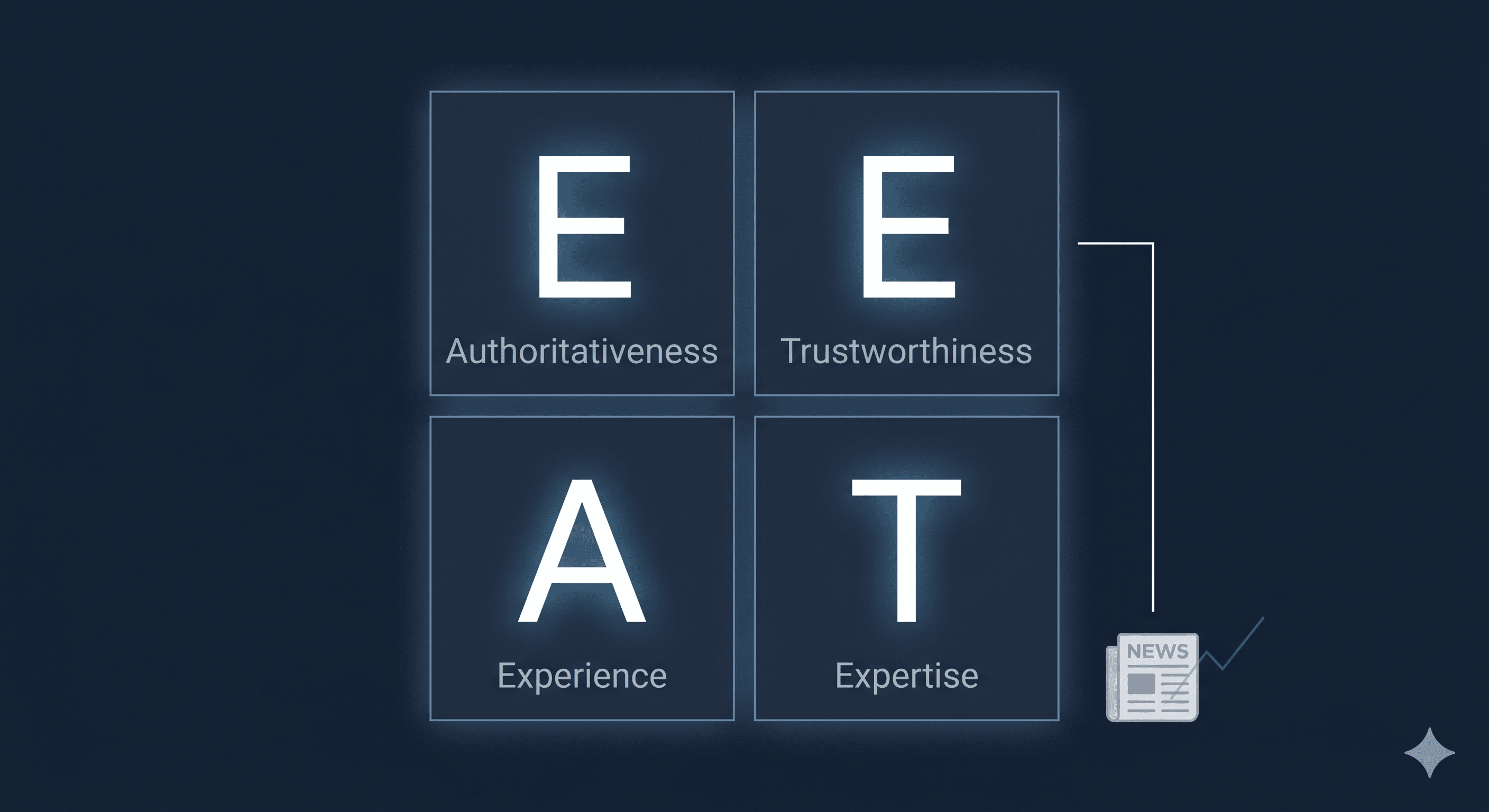
E-E-A-T (Experience, Expertise, Authoritativeness, Trustworthiness) is the framework Google uses to decide whether your website deserves to rank, be cited by AI Overviews, or appear in ChatGPT answers
Consultants lose clients to competitors who simply look more credible online. The fix isn't a PR retainer — it's five targeted moves that build verifiable authority fast: a press placement, a dynamic media badge, proof seeded across sales touchpoints, one original data point, and a podcast appearance.
Every ecommerce brand running paid ads eventually asks the same question: what happens if we turn this off? PR builds what paid advertising can't — traffic and credibility that compound after the spend stops.
You ran the ads. Traffic came, stayed 11 seconds, and left. Then one journalist mentioned your company — unprompted — and your inbox filled for two days. That gap has a name. It's called earned media.
Press coverage doesn't convert by existing. It converts by being in the right place at the right moment. Here are the 3 website spots where media mentions actually move the needle -- with exact placement tips for each.
Most press releases don't fail because the news is boring. They fail because the angle is written for the company, not the audience. This post walks founders, SMB owners, and consultants through a three-part framework for finding the angle that makes any announcement relevant
Your press release went out. Your distribution report said "500+ outlets." Google shows nothing. 6 free tools that tell you what's actually happening — and how to turn it into something useful.
Most businesses earn a press placement, post it once, and forget it exists. That's a missed opportunity. Media mentions — placed deliberately inside a sales process — reduce the single biggest obstacle between interest and a signed contract: doubt. This guide covers exactly where and how to deploy press coverage as a working sales asset, from first impressions on your website to the internal approval conversations you'll never be in the room for.
Your website passed your own review — but you're not the one it needs to convince. First-time visitors scan for proof you're real, and most business websites fail that test in five predictable ways. This article breaks down each credibility gap and what actually fixes it.
This post breaks down the real alternatives — productized media packages, no-contract services, digital PR platforms, and targeted distribution — with honest cost comparisons and one verification test every buyer should run before paying anyone.
Most businesses don't lose money on PR because they picked the wrong agency. They lose money because they picked the wrong model for their stage. This post breaks down the real cost, commitment, and risk of a PR retainer versus a one-time package — and gives you a clear framework to decide which one fits where your business actually is right now.
Most deals don't die in the pitch room. They die the moment an investor Googles your company and finds nothing worth trusting. This post shows founders exactly what investors check and how to fix it before it costs you a deal.
Your website gets traffic but doesn't convert — and the problem isn't your copy, your design, or your call to action. This post explains why visitors run a trust check before they read your offer, why self-promotion has a credibility ceiling no amount of rewriting can break through, and how one layer of verifiable third-party press coverage changes how everything else on your page performs.
This post explains what media credibility is, why 87% of buyers research you before reaching out, what they think when they find no third-party proof, and the fastest legitimate way to build it from zero without a retainer or long-term contract.
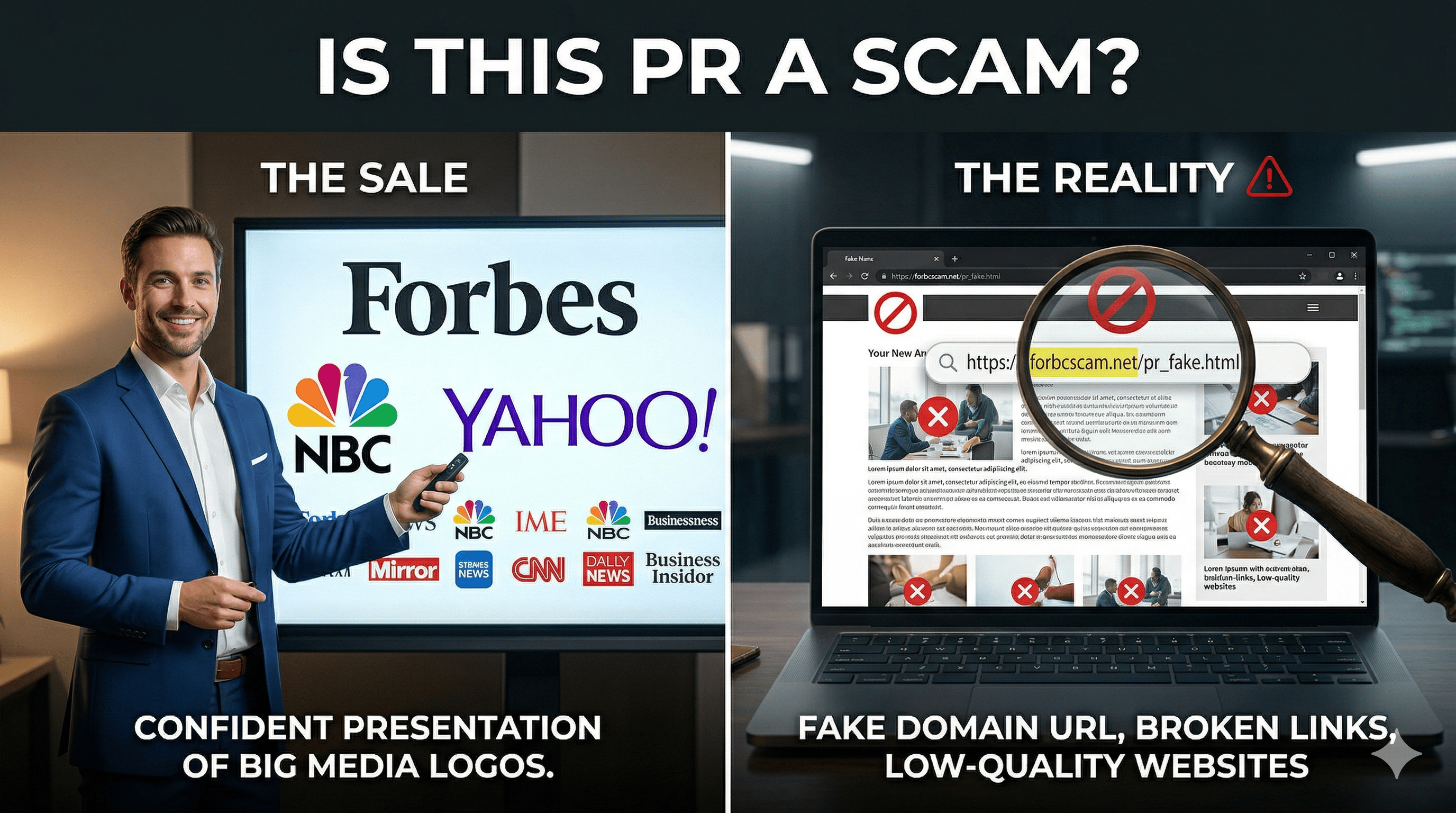
If a PR or media visibility service promises guaranteed placements in Forbes, NBC, or Business Insider, that promise is almost always a red flag. This post breaks down exactly how guaranteed placement schemes operate — spoofed domains, wire-service deception, and outright fabrication — using real buyer complaint language.
A clear, no-fluff breakdown of press release pricing in 2026 — from DIY distribution tools to agency retainers. Explains what each pricing tier actually delivers, where value breaks down, and how to choose the right option based on credibility goals, business stage, and ROI expectations. Designed to help buyers avoid wasted spend and make defensible PR decisions.
An investigative guide exposing the five most common fraud patterns in the PR and press release distribution industry: guaranteed placements, spoofed domains, scraper site distribution, retainer ghosting, and unsafe payment demands. Includes a red flag checklist and explains what honest, verifiable media visibility actually looks like.
SEO timelines in competitive markets depend on domain authority, content depth, and link acquisition, not a fixed calendar. This post breaks down realistic timeframes by starting point and explains the highest-leverage factors for closing the gap on established competitors. It also covers what to track while rankings are building and why earned media accelerates the process.
Many brands invest in content and technical SEO but still see flat rankings. The missing piece is usually authority: the external signals search engines use to decide whether your site is credible enough to surface. This post explains what authority signals are, why they matter more than most SEO checklists admit, and how earned media helps build them over time.
Google's AI Overviews are reshaping how brands get discovered in search. This post breaks down the key factors that influence AI Overview ranking, including topical authority, content structure, E-E-A-T signals, and the role of third-party PR validation in building the credibility Google rewards.
Traditional SEO and LLM optimization serve different goals but share important foundations. This post breaks down the key differences between the two approaches and explains why brands that want to stay visible in both search and AI-generated results need to invest in both simultaneously.
In 2026, AI search visibility is driven by citation, not position. This guide breaks down the seven core AI search ranking factors, from entity authority and E-E-A-T signals to third-party media coverage and cross-platform brand presence, and what your brand needs to build to get consistently cited in ChatGPT, Perplexity, and Google AI Overviews.
AI SEO optimization is reshaping how brands earn visibility online. This guide explains what it means, how it differs from traditional SEO, and the practical steps modern brands need to stay visible in ChatGPT, Google AI Overviews, and other AI-powered search engines.
Not all PR platforms are equal—coaches and consultants need media features that build trust. Brand Featured offers premium placements with real support.
Research shows visitors only read 20 to 28% of any web page. This guide explains how real online reading habits work, from F-pattern scanning to short paragraphs and repeated CTAs, and how to structure your content to match the way people actually consume it.
Ranking well but traffic still flat? Six concrete signs your site is optimized for search engines but invisible to ChatGPT and AI Overviews — and exactly what to check on your own site first, no guesswork required.
Getting a media package approved internally often fails on framing rather than price. This post shows how to present guaranteed media placements as a fixed-cost purchase with defined line items, map the value to sales, SEO, and trust, and build a one-page approval doc finance can sign off without an attribution debate.
Canada Day isn't decoration — it's a recurring press hook, backed by real "Buy Canadian" sentiment. Here's the framework for pitching it honestly, timing it right, and turning real coverage into an asset instead of a one-day mention.
Most PR retainers bill for ongoing effort, not delivered placements. This piece breaks down why that model fails consultants specifically, and what a fixed-scope, verifiable alternative looks like in 2026.
White-label PR lets agencies add media visibility without in-house PR staff. Most partnerships fail over outlet quality and deliverable presentation. Here's what separates coverage that builds client trust from coverage that quietly damages it.
Publishing more content won't fix a weak authority signal profile. Here are the 7 external signals — earned media, backlinks, entity data, and more — that tell search engines and AI systems your brand is worth trusting.
Most B2B service businesses collect testimonials and case studies, then wonder why prospects still hesitate. Here's what media coverage does that other credibility signals can't.
Most "As Seen On" badges display media logos without linking to real coverage — which means they're decorative, not verifiable. Here's what separates a trust-building badge from one that quietly undermines the credibility it's supposed to prove.
Most businesses that waste money on media coverage fail not because they chose the wrong vendor — but because they invested at the wrong time. This post gives you a clear self-assessment: seven conditions that position you to see real ROI from media visibility, and three honest situations where the defensible move is to wait. Built on primary buyer psychology research, not PR industry optimism.
Productized PR is a fixed-scope, fixed-price alternative to the traditional agency retainer — defined in advance, delivered on a clear timeline, with verifiable media placements as the output. The post establishes Brand Featured as the category authority for this emerging model, makes the case for why the retainer is failing most SMB buyers, and converts that argument directly into a package purchase.
Most press releases go live within 48 hours — but buyers have no idea what happens next, and that silence is where PR regret is born. This post maps the full week-by-week timeline from submission through distribution, indexing, earned coverage, and long-term asset deployment, giving buyers the context to evaluate their investment accurately and act on it strategically.
Most PR budget goes to tactics that stopped working years ago — wire distribution, guaranteed placements, retainers without a story. This post maps what actually builds verifiable credibility in 2026, and what quietly drains budget while producing a report full of numbers that don't convert.
E-E-A-T (Experience, Expertise, Authoritativeness, Trustworthiness) is the framework Google uses to decide whether your website deserves to rank, be cited by AI Overviews, or appear in ChatGPT answers
Consultants lose clients to competitors who simply look more credible online. The fix isn't a PR retainer — it's five targeted moves that build verifiable authority fast: a press placement, a dynamic media badge, proof seeded across sales touchpoints, one original data point, and a podcast appearance.
Every ecommerce brand running paid ads eventually asks the same question: what happens if we turn this off? PR builds what paid advertising can't — traffic and credibility that compound after the spend stops.
You ran the ads. Traffic came, stayed 11 seconds, and left. Then one journalist mentioned your company — unprompted — and your inbox filled for two days. That gap has a name. It's called earned media.
Press coverage doesn't convert by existing. It converts by being in the right place at the right moment. Here are the 3 website spots where media mentions actually move the needle -- with exact placement tips for each.
Most press releases don't fail because the news is boring. They fail because the angle is written for the company, not the audience. This post walks founders, SMB owners, and consultants through a three-part framework for finding the angle that makes any announcement relevant
Your press release went out. Your distribution report said "500+ outlets." Google shows nothing. 6 free tools that tell you what's actually happening — and how to turn it into something useful.
Most businesses earn a press placement, post it once, and forget it exists. That's a missed opportunity. Media mentions — placed deliberately inside a sales process — reduce the single biggest obstacle between interest and a signed contract: doubt. This guide covers exactly where and how to deploy press coverage as a working sales asset, from first impressions on your website to the internal approval conversations you'll never be in the room for.
Your website passed your own review — but you're not the one it needs to convince. First-time visitors scan for proof you're real, and most business websites fail that test in five predictable ways. This article breaks down each credibility gap and what actually fixes it.
This post breaks down the real alternatives — productized media packages, no-contract services, digital PR platforms, and targeted distribution — with honest cost comparisons and one verification test every buyer should run before paying anyone.
Most businesses don't lose money on PR because they picked the wrong agency. They lose money because they picked the wrong model for their stage. This post breaks down the real cost, commitment, and risk of a PR retainer versus a one-time package — and gives you a clear framework to decide which one fits where your business actually is right now.
Most deals don't die in the pitch room. They die the moment an investor Googles your company and finds nothing worth trusting. This post shows founders exactly what investors check and how to fix it before it costs you a deal.
Your website gets traffic but doesn't convert — and the problem isn't your copy, your design, or your call to action. This post explains why visitors run a trust check before they read your offer, why self-promotion has a credibility ceiling no amount of rewriting can break through, and how one layer of verifiable third-party press coverage changes how everything else on your page performs.
This post explains what media credibility is, why 87% of buyers research you before reaching out, what they think when they find no third-party proof, and the fastest legitimate way to build it from zero without a retainer or long-term contract.
If a PR or media visibility service promises guaranteed placements in Forbes, NBC, or Business Insider, that promise is almost always a red flag. This post breaks down exactly how guaranteed placement schemes operate — spoofed domains, wire-service deception, and outright fabrication — using real buyer complaint language.
A clear, no-fluff breakdown of press release pricing in 2026 — from DIY distribution tools to agency retainers. Explains what each pricing tier actually delivers, where value breaks down, and how to choose the right option based on credibility goals, business stage, and ROI expectations. Designed to help buyers avoid wasted spend and make defensible PR decisions.
An investigative guide exposing the five most common fraud patterns in the PR and press release distribution industry: guaranteed placements, spoofed domains, scraper site distribution, retainer ghosting, and unsafe payment demands. Includes a red flag checklist and explains what honest, verifiable media visibility actually looks like.
SEO timelines in competitive markets depend on domain authority, content depth, and link acquisition, not a fixed calendar. This post breaks down realistic timeframes by starting point and explains the highest-leverage factors for closing the gap on established competitors. It also covers what to track while rankings are building and why earned media accelerates the process.
Many brands invest in content and technical SEO but still see flat rankings. The missing piece is usually authority: the external signals search engines use to decide whether your site is credible enough to surface. This post explains what authority signals are, why they matter more than most SEO checklists admit, and how earned media helps build them over time.
Google's AI Overviews are reshaping how brands get discovered in search. This post breaks down the key factors that influence AI Overview ranking, including topical authority, content structure, E-E-A-T signals, and the role of third-party PR validation in building the credibility Google rewards.
Traditional SEO and LLM optimization serve different goals but share important foundations. This post breaks down the key differences between the two approaches and explains why brands that want to stay visible in both search and AI-generated results need to invest in both simultaneously.
In 2026, AI search visibility is driven by citation, not position. This guide breaks down the seven core AI search ranking factors, from entity authority and E-E-A-T signals to third-party media coverage and cross-platform brand presence, and what your brand needs to build to get consistently cited in ChatGPT, Perplexity, and Google AI Overviews.
AI SEO optimization is reshaping how brands earn visibility online. This guide explains what it means, how it differs from traditional SEO, and the practical steps modern brands need to stay visible in ChatGPT, Google AI Overviews, and other AI-powered search engines.
Not all PR platforms are equal—coaches and consultants need media features that build trust. Brand Featured offers premium placements with real support.
Research shows visitors only read 20 to 28% of any web page. This guide explains how real online reading habits work, from F-pattern scanning to short paragraphs and repeated CTAs, and how to structure your content to match the way people actually consume it.
.png)

.png)
.png)
.png)
.png)
.png)
.png)

.png)
.png)
.png)
.png)
.png)
.png)
.png)
.png)
.png)
.png)
.png)
.png)
.png)



.png)

.png)
.png)